Ventilator Support
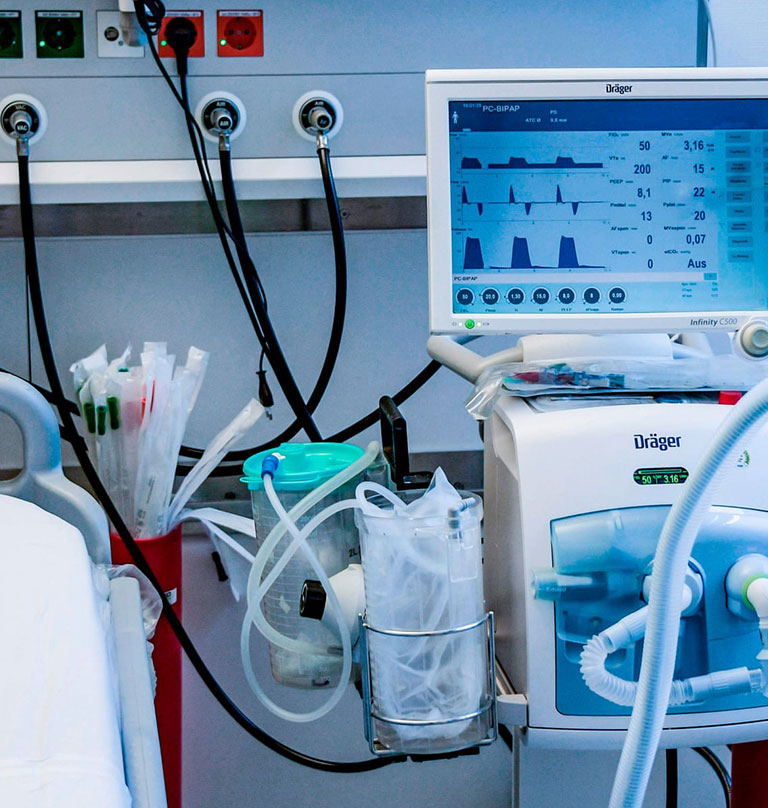
Mechanical ventilation or ventilatory support means the patient is on a machine that helps them breathe. A tube is put in through their nose or mouth into the trachea (windpipe). It is attached to a ventilator or "vent".
The ventilator is a machine that can give a breath to a patient who may have trouble breathing or is not able to breathe. The number of breaths and the size of the breath (amount of volume or pressure) are set by the Cardiac Intensive Care Unit (CICU) team.
Patients need mechanical ventilation at these times because they are given anesthesia or sedation that can suppress their own drive to breathe. Often the vent is needed to control breathing so the heart can rest. Sometimes, after shorter procedures, patients will be able to breathe on their own before leaving the operating room and will not require a vent. After surgery, most babies arrive in the CICU on the vent. How long a patient stays on the vent depends on how severe the cardiac defect is and the type of surgery performed.